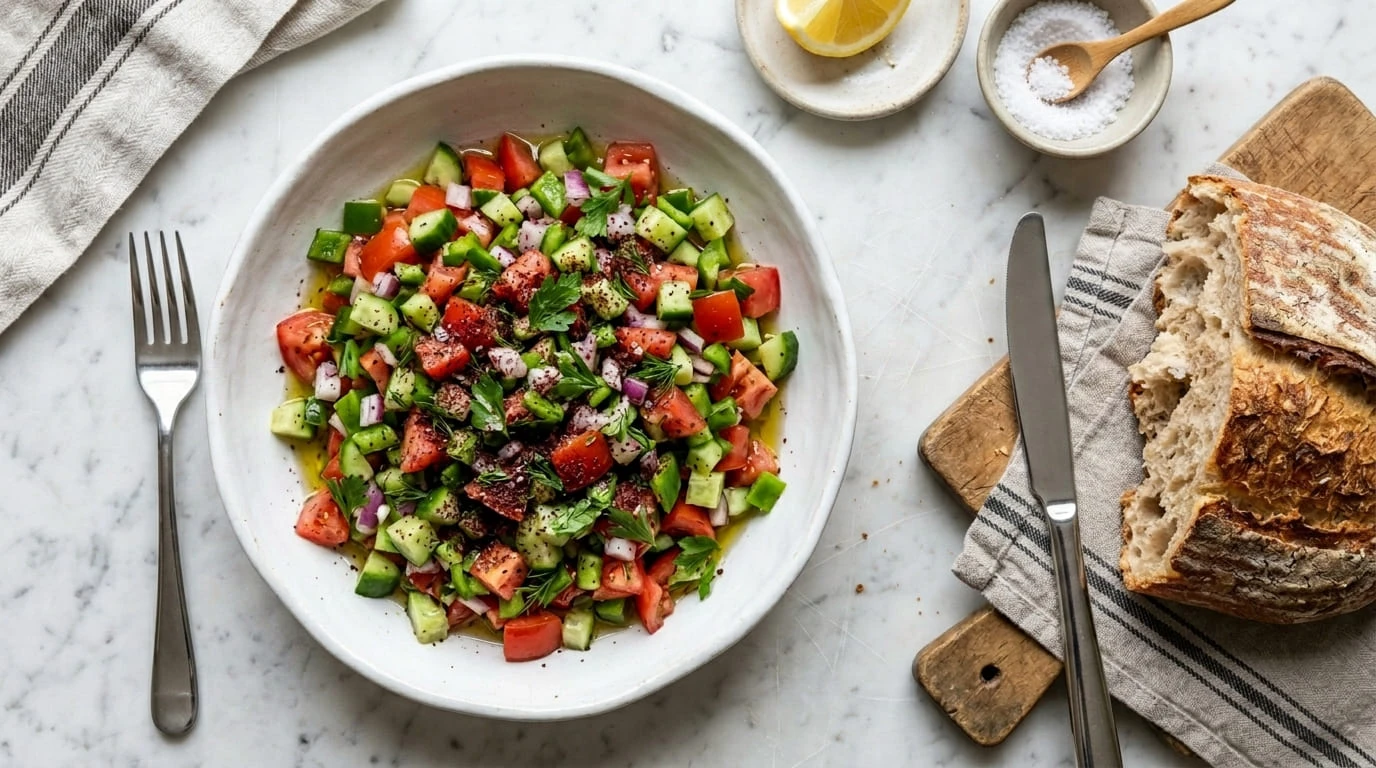
This vibrant Turkish shepherd salad combines finely diced tomatoes, crisp cucumbers, green peppers, and red onion tossed in extra virgin olive oil, fresh lemon, and tart sumac.
There is a special kind of magic in dishes that rely almost entirely on knife work rather than heat. Across the eastern Mediterranean, raw vegetable salads are not just a side thought tucked beside a protein; they are central to the table. Turkish Shepherd Salad—known locally as Çoban Salatası—is perhaps the purest example of this philosophy. It takes handfuls of everyday garden vegetables and transforms them into something vivid, hydrating, and deeply satisfying.
The name stems from traditional nomadic herders who carried simple ingredients into the pastures. With just a sharp pocket knife, a pocketful of salt, and whatever fresh vegetables were in season, shepherds tossed together mid-day meals right in the fields. Because there was no fancy equipment involved, the beauty of the dish came down to the freshness of the produce and the balance of acid, salt, and oil.
What sets this salad apart from a standard chopped salad is the texture. Every single ingredient is chopped down into small, neat cubes. When diced finely enough, you get every element in a single forkful: the sweet pop of ripe tomato, the cool snap of cucumber, the bite of red onion, and the sharp crunch of green pepper. It feels cohesive in a way larger salad chunks never quite achieve.
Then comes the liquid gold at the bottom of the bowl. As the salt rests on the freshly cut vegetables, it draws out their natural juices. Combined with rich extra virgin olive oil and tart lemon juice, those juices merge into a tangy, savory broth. Dunking a piece of crusty bread directly into the bottom of the bowl after the vegetables are gone is practically mandatory.
Why You’ll Love This Recipe
Zero cooking involved: You only need a cutting board and a chef’s knife. It comes together in about fifteen minutes from start to finish.
Naturally dietary-friendly: It is naturally vegan, gluten-free, and low-carb, making it an easy crowd-pleaser for multi-diet dinners.
Distinctive sumac profile: Ground sumac gives the dressing an earthy, citrus-forward tang that sets it apart from typical western vinaigrettes.
Built-in dipping sauce: The salted vegetable juices collect at the base, creating an incredible sauce for flatbread or crusty loaves.
Tips for Success
Master the Small, Uniform Dice
Aim for small cubes roughly three-eighths of an inch thick. You do not want huge chunks of onion overpowering a bite, nor do you want stringy strips of pepper. Uniformity ensures every bite offers a balanced mix of flavors and textures. Take your time with the chopping—it is the main effort this dish asks of you.
Pick the Right Tomatoes
Since tomatoes make up the bulk of the bowl, quality matters. Look for ripe vine tomatoes or Roma tomatoes that feel heavy for their size and smell fragrant near the stem. Avoid pale, mealy winter tomatoes if you can help it. If your tomatoes are exceptionally watery, you can drain off a small amount of liquid, but keep most of it—that liquid forms the heart of the dressing.
Choose Thin-Skinned Cucumbers
Persian cucumbers are ideal here because their skins are thin, their flesh is dense, and their seeds are tiny. You do not need to peel them or scrape out the seeds. If you only have thick-skinned English or field cucumbers on hand, peel them first and scoop out the watery seed channel with a spoon before dicing so your salad stays crisp.
Do Not Skip the Resting Period
Resist the urge to serve this immediately after mixing. Give the salad ten to fifteen minutes to sit on the kitchen counter at room temperature. That brief pause allows the salt to pull out the tomato and cucumber juices, softening the sharp bite of the raw red onion and creating the signature pool of tangy dressing at the bottom.
Variations & Substitutions
Add Salty Turkish White Cheese
For a richer version, top the salad with crumbled beyaz peynir or a quality sheep’s milk feta just before serving. The creamy, salty cheese cuts through the sharp acidity of the lemon and sumac beautifully.
Drizzle with Pomegranate Molasses
In Southern Turkey, cooks often finish this salad with a thin drizzle of nar ekşisi (pomegranate molasses). A single teaspoon adds a complex, sweet-sour depth and a glossy finish that looks gorgeous on the table.
Experiment with Fresh Herbs
Flat-leaf parsley is traditional, but adding a tablespoon of finely chopped fresh mint or dill gives the dish a lovely herbal lift. Fresh mint is particularly refreshing during warm summer months.
Swap the Peppers
If you have access to a Turkish or Middle Eastern market, look for long green pointed peppers (sivri biber). They have a slightly thinner skin and a brighter pepper flavor than standard green bell peppers. If you prefer a bit of heat, swap in a finely diced banana pepper or half a jalapeño.
Storage & Reheating
This salad is best served fresh on the day it is made. However, if you have leftovers, store them in an airtight glass container in the refrigerator for up to two days.
Keep in mind that as it sits in the fridge, the vegetables will continue to release moisture and lose a bit of their crunch. The flavor of the broth, however, will be sensational. Give it a gentle toss and let it sit on the counter for ten minutes to take off the chill before eating. Do not freeze this salad, as the high water content will cause the raw vegetables to turn mushy upon thawing.
Serve this alongside grilled chicken skewers, lamb chops, roasted fish, or simply with a warm stack of pita bread and creamy hummus for a complete Mediterranean meal.
Frequently Asked Questions
Can I make Turkish shepherd salad ahead of time?
You can chop the vegetables a few hours ahead and keep them chilled, but wait to add the salt, oil, and lemon juice until 15 minutes before serving to keep the vegetables crisp.
What can I substitute for ground sumac?
If you cannot find sumac, use extra fresh lemon juice along with a tiny pinch of lemon zest or a dash of pomegranate molasses to recreate that signature tart acidity.
Do I need to peel the cucumbers?
Persian and English cucumbers have soft skins that do not require peeling. Standard field cucumbers should be peeled and seeded before dicing.
What bread pairs best with Çoban Salatası?
Warm Turkish pide, soft pita, or a crusty loaf of sourdough works wonderfully for dipping into the salted juice at the bottom of the bowl.
Turkish Shepherd Salad
A refreshing, juicy Turkish staple meant to be scooped up with fresh, warm bread.
Dice the tomatoes, Persian cucumbers, green bell peppers, and red onion into small, uniform cubes about 3/8-inch in size. Transfer all chopped vegetables and the fresh parsley to a large salad bowl.
Sprinkle the ground sumac and fine sea salt evenly over the vegetables. Toss lightly to distribute the spices.
Drizzle the extra virgin olive oil and freshly squeezed lemon juice over the top. Gently fold everything together until all pieces are evenly coated.
Allow the salad to rest at room temperature for 10 to 15 minutes before serving. This lets the salt extract the natural juices to form a rich, citrusy dressing at the bottom of the bowl.
Keyword Turkish Shepherd Salad
Tima
I’m Tima Miller, a self-taught cook and author of the Simple Yummy cookbook series. Every recipe here is tested, clearly written, and designed to work in a real home kitchen.