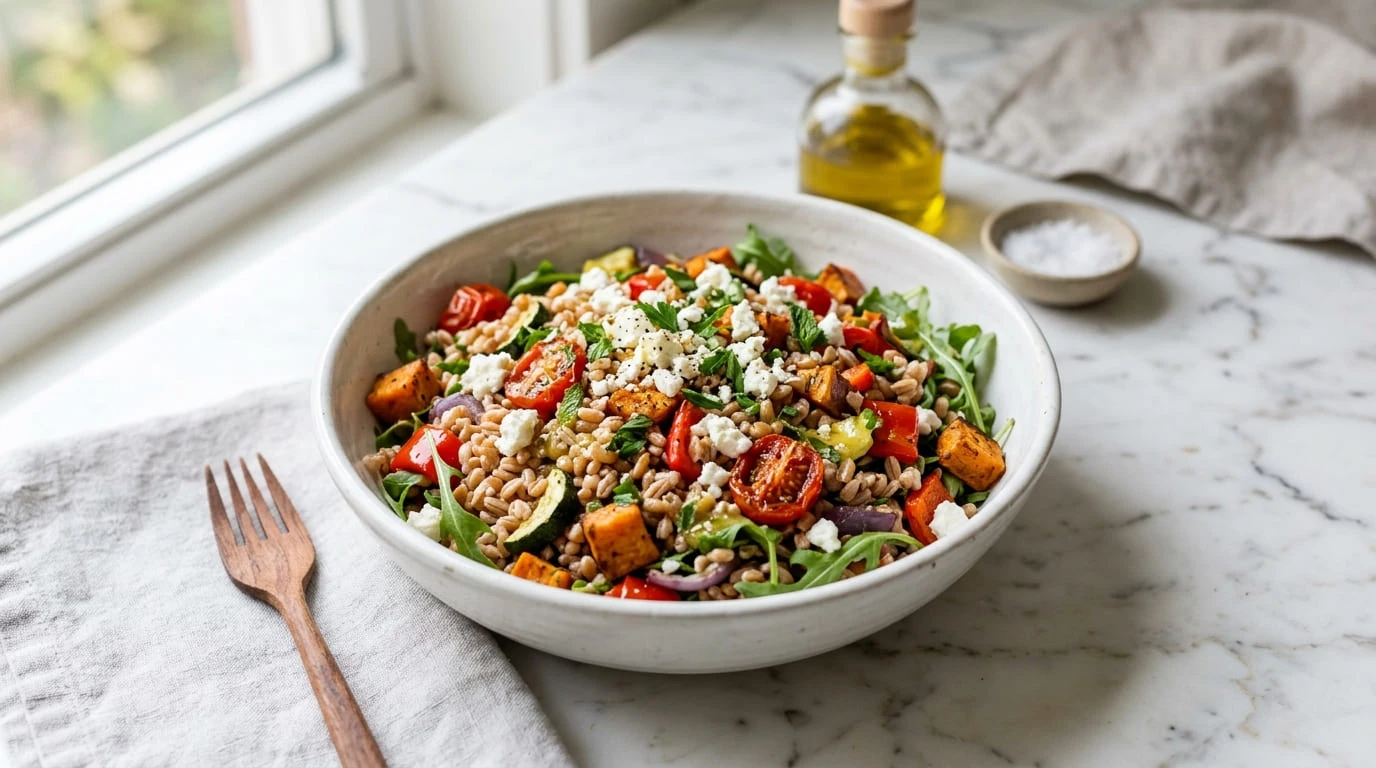
There is a quiet magic that happens in the kitchen when a tray of chopped vegetables hits a hot oven. Sweet red peppers blister, red onions soften into sweet dark purple wedges, and zucchini slices pick up rich golden edges. Combine those savory aromas with the cozy, nutty smell of simmering ancient grains, and suddenly your kitchen feels like the warmest room in the house.
Farro salad with roasted vegetables brings that comfort straight to your dinner plate. It is a hearty, rustic dish that sits right at the intersection of a crisp salad and a filling grain bowl. Farro has been cultivated across the Mediterranean for thousands of years, and for good reason. Its plump, toothsome texture stands up to bold dressings and warm roasted ingredients without ever turning mushy or soggy.
What makes this grain salad work so well is the contrast in textures and temperatures. The chew of the farro meets tender, caramelized vegetables and bright, sharp lemon juice. Just before serving, salty feta cheese gets gently folded into the mix. The cheese softens slightly against the warm grains, creating tiny creamy bites throughout the bowl. It works as a light main course on a busy weeknight, but it shines just as brightly beside grilled meats or roasted chicken on the weekend.
Best of all, this recipe requires minimal hands-on effort. While the vegetables roast on a sheet pan, the grains simmer on the stovetop. Within three quarters of an hour, you have a wholesome meal on the table that tastes like it came from a neighborhood bistro.
Why You’ll Love This Recipe
Unbeatable texture balance: Chewy farro paired with soft roasted vegetables and creamy feta gives every forkful a satisfying bite.
Sheet-pan simplicity: The vegetables roast together on a single tray, keeping cleanup fast and painless.
Vibrant naturally rich flavors: High-heat roasting concentrates the natural sugars in peppers and onions, so you do not need heavy sauce to make this taste incredible.
Exceptional for meal prep: Unlike delicate leafy greens, cooked farro holds up in the fridge for days without wilting.
Tips for Success
Cooking farro is very straightforward, but a few small details make the difference between an average grain salad and a memorable one.
Give the Veggies Room to Breathe
When you spread your sliced zucchini, pepper, and onion onto the baking sheet, make sure they have a bit of space. If you pile the vegetables on top of one another, they will trap moisture and steam instead of roasting. You want high heat to brown the edges, which creates those delicious caramelized flavors. If your sheet pan feels crowded, divide the vegetables between two pans instead.
Dress the Grains While Warm
Pour your olive oil and freshly squeezed lemon juice over the farro right after you drain off the cooking water. Warm grains open up and absorb seasonings far better than chilled grains do. As the farro cools down, it locks in that zesty lemon and fruit-forward olive oil layer deep inside each kernel.
Time the Feta Just Right
Resist the urge to dump your crumbled feta into the bowl while the vegetables and farro are blazing hot. If the ingredients are scorching, the feta will melt instantly and turn the salad cloudy. Let the warm farro and veggies rest together in the bowl for about five to eight minutes first. You want the cheese to soften gently while keeping its distinct, salty shape.
Choose the Right Type of Farro
Check the packaging when buying your grains. Most grocery stores sell pearled farro, which has had the outer bran removed so it cooks up quickly in about twenty minutes. If you accidentally pick up whole or semi-pearled farro, you will need extra liquid and roughly fifteen additional minutes of simmer time on the stove.
Variations & Substitutions
Think of this recipe as a reliable template that changes smoothly with the seasons or whatever you happen to have sitting in your crisping drawer.
Switch up the vegetables: In late autumn, swap out the zucchini for small cubes of butternut squash, sweet potato, or cauliflower florets. In spring, tender asparagus spears and quartered radish work beautifully on the roasting pan.
Add fresh green herbs: A handful of chopped flat-leaf Italian parsley, fresh dill, or torn mint leaves tossed in right at the end adds a fresh green pop that cuts through the rich roasted flavors.
Try a different cheese: Soft, tangy goat cheese (chèvre) makes a wonderful substitute for feta. If you prefer a nuttier, sharper finish, use a vegetable peeler to shave ribbons of aged Parmesan or Pecorino Romano over the top of the bowl.
Boost the protein: To turn this side into a heavy main dish, fold in a can of rinsed chickpeas or white navy beans along with the roasted vegetables. You can also top individual bowls with sliced grilled chicken breast or seared salmon.
Gluten-free alternatives: Farro contains wheat, so it is not suitable for those on a gluten-free diet. However, you can make this exact recipe using brown rice, sorghum, or wild rice as a hearty substitute.
Storage & Reheating
One of the true joys of grain salads is how well they travel and keep. Any leftovers can be transferred into an airtight container and kept in the refrigerator for up to four days. As it sits, the grains continue to soak up the lemon and oil, making lunch the next day even more flavorful.
You can enjoy leftovers straight from the fridge cold, bring the bowl to room temperature on your counter for twenty minutes, or warm it briefly in the microwave. If the grains seem a bit dry after chilling overnight, simply add a quick drizzle of extra-virgin olive oil and a fresh squeeze of lemon juice to bring back its luster.
Because the feta cheese and roasted vegetables are already mixed into the grain, freezing this salad is not recommended. The vegetables will lose their crisp texture upon thawing.
Gather your ingredients, slice up your favorite vegetables, and let the oven do the heavy lifting tonight. It is an honest, comforting dish that deserves a permanent spot in your regular dinner lineup.
Frequently Asked Questions
Can I make this farro salad ahead of time?
Yes, this salad holds up wonderfully in the refrigerator for up to four days. Eat it cold, at room temperature, or gently warmed.
What is a good gluten-free substitute for farro?
Sorghum, brown rice, or quinoa are excellent gluten-free swaps that offer a hearty texture similar to farro.
How do I keep roasted vegetables from turning soggy?
Make sure your vegetables are spread in a single layer on the pan. Overcrowding traps steam and prevents the edges from caramelizing properly.
Do I need to soak pearled farro before cooking?
Pearled farro does not require soaking. Simply rinse it under cold water before boiling, and it will cook up tender in about 20 minutes.
Farro Salad with Roasted Vegetables
An ancient Roman grain bowl updated with caramelized, oven-roasted vegetables.
Preheat your oven to 400°F (200°C) and line a rimmed baking sheet with parchment paper.
Arrange the diced zucchini, red bell pepper, and red onion on the baking sheet. Drizzle with 2 tablespoons of olive oil, half of the kosher salt, and the black pepper. Toss well and spread into an even single layer.
Roast in the oven for 18 to 20 minutes until tender and caramelized around the edges.
While the vegetables roast, combine the rinsed farro and broth in a saucepan over high heat. Bring to a boil, then turn the heat down to low, cover, and simmer for 20 to 25 minutes until tender with a pleasant chew. Drain any remaining cooking liquid.
Transfer the warm farro to a large bowl. Drizzle with the remaining 2 tablespoons of olive oil, lemon juice, and the remaining salt. Stir so the warm grains absorb the seasoning.
Gently fold the warm roasted vegetables and fresh parsley into the dressed farro. Let stand for 5 to 10 minutes so the mixture cools slightly.
Fold in the crumbled feta cheese right before serving.
Keyword Farro Salad with Roasted Vegetables
Tima
I’m Tima Miller, a self-taught cook and author of the Simple Yummy cookbook series. Every recipe here is tested, clearly written, and designed to work in a real home kitchen.