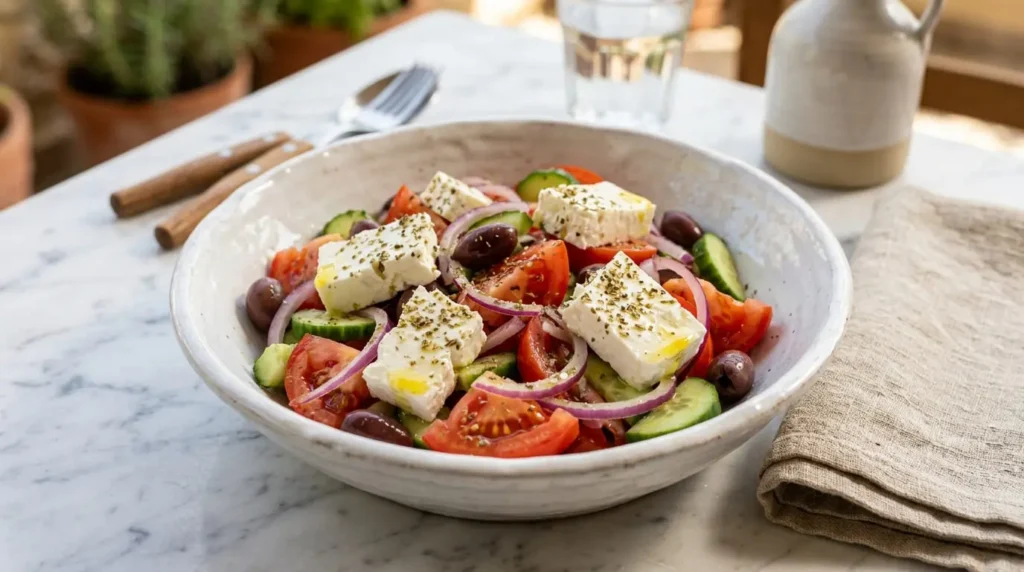
Packed with thick slices of vine-ripened tomatoes, crunchy cucumbers, salty Kalamata olives, and creamy feta cheese, authentic Greek horiatiki comes together in just fifteen minutes.
Real traditional Greek salad, known as horiatiki in Greece, doesn’t contain a single piece of lettuce. It isn’t piled high with chopped romaine, nor is it smothered in heavy bottled dressing. Instead, it relies on a handful of sturdy, fresh sun-drenched ingredients served at peak ripeness. Thick wedges of sweet, fragrant tomatoes sit alongside cool cucumbers, fiery red onion ribbons, and plump dark Kalamata olives.
What makes this dish so memorable isn’t complicated technique—it is patience and balance. A simple drizzle of vibrant green extra virgin olive oil, a squeeze of tart lemon, and a generous pinch of wild dried oregano pull the juices out of the tomatoes as they sit. That liquid gathers at the bottom of your bowl, blending with the oil to create a incredible savory juice that begs for a heel of crusty bread.
Sitting right on top of those glistening vegetables is a proper slab of sharp, salty feta cheese. Rather than crumbling the cheese into tiny bits that melt into mush, leaving it in generous chunks lets you cut off a piece of cool feta with every crisp bite of cucumber and tomato. It takes fifteen minutes to assemble, requires zero cooking, and brings pure coastal sunshine to your meal table.
Why You’ll Love This Recipe
No soggy leaves: Without leafy greens hiding at the bottom, every bite stays crisp, vibrant, and packed with flavor.
Ready in 15 minutes: Simple knife work is all that stands between you and a fresh, satisfying dish.
Built-in dipping broth: Resting the salad lets the tomatoes release sweet juices that mingle with olive oil for the ultimate bread-dipping sauce.
Naturally versatile: Works seamlessly as a light summer dinner on its own or alongside grilled chicken, lamb chops, or fish.
Ingredients
4 medium (approx. 1.3 lbs) ripe vine tomatoes, trimmed and cut into thick, heavy wedges
1 large English or Persian cucumber, halved lengthwise and cut into thick half-moons
1/2 medium red onion, sliced into paper-thin half-rings
1/2 cup pitted Kalamata olives, gently drained
1 thick block (about 7 oz / 200g) real feta cheese in brine (sheep or goat milk preferred)
1/3 cup cold-pressed extra virgin olive oil (plus a little extra for finishing)
3 tablespoons freshly squeezed lemon juice
1 teaspoon dried oregano (Greek mountain oregano works wonderfully)
1/2 teaspoon kosher salt
Instructions
Combine the vegetables: Choose a wide, shallow bowl rather than a deep mixing bowl. Scatter the thick tomato wedges, cucumber half-moons, shaved red onion, and Kalamata olives evenly across the bottom.
Mix the simple dressing: In a small glass measuring cup, combine the extra virgin olive oil, fresh lemon juice, dried oregano, and kosher salt. Whisk vigorously for about 15 seconds until the mixture turns slightly pale and emulsified.
Dress and toss gently: Pour the liquid evenly over the piled vegetables. Using two large wooden spoons, gently lift and turn the vegetables from the bottom six to eight times. You want every slice lightly coated without bruising the tender tomatoes.
Let it rest: Leave the bowl right on the kitchen counter at room temperature for exactly 10 minutes. This short rest allows the salt to draw out natural moisture from the tomatoes, combining with the oil into a fragrant broth.
Add the feta and serve: Take the block of feta out of its brine. Break or slice it into thick, rustic slabs or large broken chunks and lay them over the vegetables. Finish with a final light drizzle of olive oil over the cheese and a tiny pinch of dried oregano before serving.
Tips for Success
Keep your tomatoes on the kitchen counter, never in the refrigerator. Cold temperatures permanently damage the cell walls and aroma compounds inside a fresh tomato, turning sweet flesh mealy and dulling its natural flavor. For the best result in a raw salad, room-temperature tomatoes are essential.
Invest in block feta packed in liquid brine rather than containers of pre-crumbled cheese. Pre-crumbled feta is coated in anti-caking cellulose powders that dry out the cheese and give it a chalky finish. Creamy, tangy block feta made from sheep or goat milk provides the rich, buttery contrast this salad needs.
Don’t skip the 10-minute counter rest before bringing the bowl to the table. That brief window gives the salt time to extract tomato water, which blends with the acidity of the lemon juice and the fruitiness of the olive oil. That light juice at the bottom of the bowl is the prize of a real horiatiki.
Variations & Substitutions
If you prefer a sharper kick to your dressing, substitute half of the fresh lemon juice with good-quality red wine vinegar. Many coastal tavernas in Greece use red wine vinegar exclusively, while island versions often favor lemon.
Green bell pepper slices are another traditional addition in many Greek homes. Cut half a firm green bell pepper into thin strips and toss it in with the cucumbers for an extra snappy crunch and a mild pepper bite.
Capery brightness works surprisingly well here too. A tablespoon of drained salted capers adds a delightful pop of sour brine that balances the heavy creaminess of the thick feta slice.
Storage & Prep Notes
This salad is best enjoyed freshly made, while the cucumbers are snappy and the tomatoes hold their structural shape. However, if you have leftovers, cover the bowl tightly and store it in the fridge for up to 2 days.
Before serving chilled leftovers, set the bowl back on the kitchen counter for 15 minutes. Cold extra virgin olive oil often thickens or solidifies in the refrigerator; letting it come up to room temperature re-liquefies the dressing and brings back the deep aroma of the oregano.
Frequently Asked Questions
Why isn’t there any lettuce in a traditional Greek salad?
Authentic Greek horiatiki originated as a rustic meal for farm workers, built around long-lasting garden staples like tomatoes, cucumbers, onions, and preserved olives or cheese. Leafy greens wilt quickly in warm climates and dilute the intense combination of ripe vegetables and rich olive oil.
Can I make this salad ahead of time for a dinner party?
You can slice the cucumbers, red onions, and dress the olives an hour or two in advance. However, hold off on salting, dressing, and adding the tomatoes until 15 minutes before you sit down to eat so the vegetables don’t turn soft or waterlogged.
What kind of oregano works best?
Dried oregano is actually preferred over fresh oregano in traditional horiatiki. Look for dried Greek oregano on the stem or coarse crushed oregano, which offers a robust, earthy pungency that fresh leaves simply cannot replicate in raw oil dressings.
How should I serve the feta cheese?
Serve the feta in large, thick slices or large broken pieces directly on top of the salad rather than tossing small cubes into the bowl. This keeps the salad looking clean and prevents the cheese from breaking down into cloudy white crumbs.
Nutritional values are estimates and can vary based on the specific brands and fresh ingredients used.
Classic Greek Salad Recipe (Authentic Horiatiki)
A rustic staple from the Greek islands, traditionally made without any lettuce at all.
4mediumapprox. 1.3 lbs ripe vine tomatoes, trimmed and cut into thick, heavy wedges
1large English or Persian cucumberhalved lengthwise and cut into thick half-moons
1/2medium red onionsliced into paper-thin half-rings
1/2cuppitted Kalamata olivesgently drained
1thick blockabout 7 oz / 200g real feta cheese in brine (sheep or goat milk preferred)
1/3cupcold-pressed extra virgin olive oilplus a little extra for finishing
3tablespoonsfreshly squeezed lemon juice
1teaspoondried oreganoGreek mountain oregano works wonderfully
1/2teaspoonkosher salt
Instructions
Combine the vegetables: Choose a wide, shallow bowl rather than a deep mixing bowl. Scatter the thick tomato wedges, cucumber half-moons, shaved red onion, and Kalamata olives evenly across the bottom.
Mix the simple dressing: In a small glass measuring cup, combine the extra virgin olive oil, fresh lemon juice, dried oregano, and kosher salt. Whisk vigorously for about 15 seconds until the mixture turns slightly pale and emulsified.
Dress and toss gently: Pour the liquid evenly over the piled vegetables. Using two large wooden spoons, gently lift and turn the vegetables from the bottom six to eight times. You want every slice lightly coated without bruising the tender tomatoes.
Let it rest: Leave the bowl right on the kitchen counter at room temperature for exactly 10 minutes. This short rest allows the salt to draw out natural moisture from the tomatoes, combining with the oil into a fragrant broth.
Add the feta and serve: Take the block of feta out of its brine. Break or slice it into thick, rustic slabs or large broken chunks and lay them over the vegetables. Finish with a final light drizzle of olive oil over the cheese and a tiny pinch of dried oregano before serving.
Keyword Classic Greek Salad
Tima
I’m Tima Miller, a self-taught cook and author of the Simple Yummy cookbook series. Every recipe here is tested, clearly written, and designed to work in a real home kitchen.