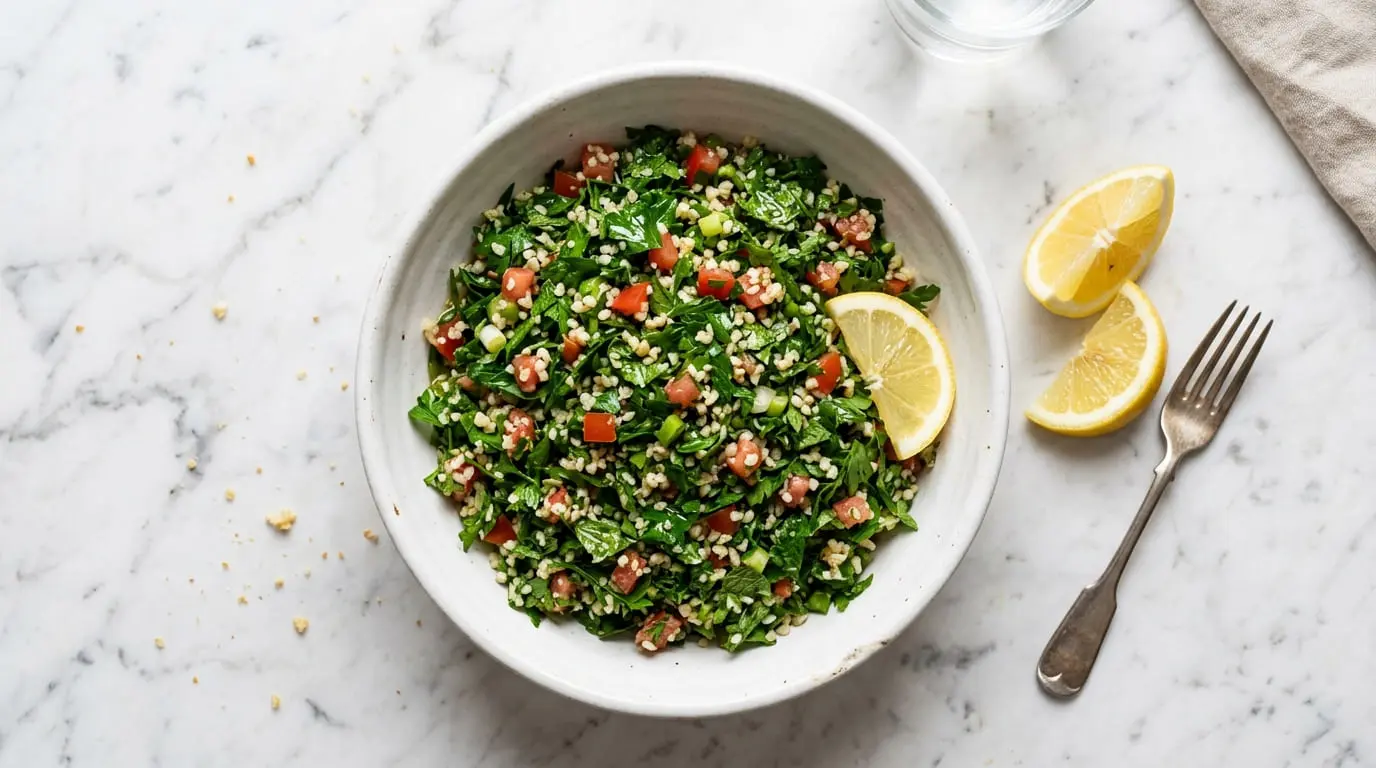
A bright, traditional Lebanese tabbouleh featuring crisp flat-leaf parsley, ripe tomatoes, fresh mint, and tender fine bulgur wheat in a zesty lemon-olive oil dressing.
If you have ever picked up tabbouleh at a Western grocery store deli, you might think of it as a heavy grain salad with a few speckles of green sprinkled throughout. Authentic Lebanese tabbouleh is the complete opposite. In Middle Eastern home kitchens, tabbouleh is first and foremost a green herb salad dominated by mountains of finely cut flat-leaf parsley and fresh mint, held together by just a light dusting of tender bulgur wheat.
Every single bite delivers a sharp, clean crunch softened by the citrusy punch of fresh lemon juice and good extra virgin olive oil. It is vibrant, peppery, and deeply refreshing. Served alongside grilled chicken skewers, creamy homemade hummus, and warm pita bread, it brings an essential balance to any traditional dinner spread or weekend gathering.
Preparing real tabbouleh takes a little patience and a bit of knife work, but the process is deeply rewarding. The magic lies entirely in how you wash, dry, and slice your herbs. Master a few simple habits, and you will produce a crisp, gorgeous salad that never turns soggy or sad.
Why You’ll Love This Recipe
Herb-Centered Flavor: Bunches of fresh flat-leaf parsley and mint form the core of the dish, giving you a clean, peppery taste without feeling heavy.
Crisp, Non-Watery Texture: Draining the tomatoes and thoroughly drying the herbs keeps every bite crisp rather than bogged down in liquid.
Pure, Simple Ingredients: High-quality olive oil, squeezed lemon juice, and a pinch of salt create a bright dressing that enhances without overpowering.
Ideal Dinner Side Dish: It pairs seamlessly with roasted meats, grilled seafood, falafel, or plain flatbreads.
Tips for Success
Great tabbouleh does not require secret spices or complex techniques. Instead, it relies on disciplined prep work. Because this recipe centers on raw greens, small adjustments during preparation make all the difference in the final bowl.
1. Dry the Herbs Completely
Moisture is the single biggest threat to a good tabbouleh. Slicing wet parsley crushes the leaves, turning them into a dark green pulp that absorbs dressing unevenly and goes limp within minutes. Wash your parsley and mint bunches early in the day. Run them through a salad spinner, then spread the leaves across clean kitchen towels to air-dry completely. They should feel totally dry to the touch before your knife ever meets the cutting board.
2. Focus on Sharp Knife Cuts
A dull blade bruises herbs instead of cutting them cleanly. When parsley is crushed under a dull knife, it bleeds its sap onto the board and loses its structure. Sharpen your chef’s knife before starting. Gather the dry leaves into a dense pile and use long, clean slicing motions. Pass through the herbs only once or twice. Sawing back and forth over the same spot turns crisp parsley into mush.
3. Salt and Drain the Tomatoes
Tomatoes hold an extraordinary amount of liquid. Once you dice them, transfer them into a fine mesh strainer set over a small bowl, and toss them with a light pinch of salt. Letting them sit for ten minutes allows excess juice to drop away. This extra step prevents your finished salad from sitting in a pool of diluted liquid at the bottom of your bowl.
4. Select Extra-Fine Bulgur (#1 Grade)
Coarse bulgur is fantastic for warm grain bowls and hearty pilafs, but authentic tabbouleh calls specifically for fine bulgur, often sold as #1 grade in Middle Eastern markets. Fine bulgur rehydrates rapidly in warm water without turning rubbery. It absorbs the olive oil and lemon juice, softening while retaining just enough body to accent the green herbs gently.
Variations & Substitutions
While classic Lebanese tabbouleh follows a time-honored formula, you can adapt it to suit dietary preferences or pantry availability.
Gluten-Free Option: Replace fine bulgur with cooked, completely cooled quinoa, or try raw hemp seeds. Hemp seeds match the tiny texture of fine bulgur remarkably well while keeping the dish grain-free.
Warm Spice Touch: Adding a subtle 1/8 teaspoon of ground Lebanese allspice or Middle Eastern seven-spice to the lemon dressing offers a warm, fragrant contrast against the cold, crisp herbs.
Extra Crunch: Though not part of the strict traditional Lebanese recipe, finely diced Persian cucumbers can be added alongside the tomatoes if you prefer extra crunch in your fresh garden salads.
Storage & Reheating
Tabbouleh is best served shortly after it is tossed, when the parsley is at its crispest. However, leftovers keep surprisingly well in an airtight container stored in the refrigerator for up to two days.
Over time, the acid from the lemon juice will soften the parsley leaves, but the flavors will blend together beautifully. Before eating leftovers, give the bowl a gentle fluff with a fork and add a quick squeeze of fresh lemon juice or a pinch of salt to wake up the flavor profile. Tabbouleh should never be frozen, as freezing damages the cellular structure of fresh herbs, leaving them limp upon thawing.
Take your time enjoying the chopping process, gather your best olive oil, and serve this bright, traditional salad as the highlight of your next homemade meal.
Frequently Asked Questions
Why is my tabbouleh watery?
Tabbouleh turns watery if parsley is chopped while still wet or if tomatoes are added without draining. Make sure herbs are bone-dry and tomatoes are drained before mixing.
Can I make tabbouleh without bulgur?
Yes, you can swap fine bulgur for cooked quinoa or raw hemp seeds for a gluten-free option with a very similar texture.
What knife should I use for chopping parsley?
Use a large, razor-sharp chef’s knife. Clean slicing motions prevent crushing the herb leaves, keeping the parsley crisp rather than bruised.
How long does fresh tabbouleh last in the fridge?
It is best eaten on the day it is made, but leftovers will keep well in an airtight container in the refrigerator for up to two days.
Authentic Lebanese Tabbouleh
A vibrant Lebanese herb salad where fresh parsley is the absolute star, not the bulgur wheat.
3large bunches fresh flat-leaf parsleyleaves only (about 150g)
1/2bunch fresh mint leavesabout 25g
3medium firm ripe tomatoesfinely diced
4green onionsscallions, finely sliced
1/3cupextra virgin olive oil
1/3cupfresh lemon juice
1teaspoonkosher salt
1/4teaspoonfreshly ground black pepper
1/8teaspoonground Lebanese allspiceoptional
Instructions
Place the fine bulgur wheat in a small heatproof bowl and pour the boiling water over top. Cover tightly with a small plate or plastic wrap and soak for 20 minutes until tender.
Set the finely diced tomatoes in a mesh strainer placed over a bowl. Sprinkle with a tiny pinch of salt and let drain for 10 minutes to remove excess juice.
Wash the parsley and mint thoroughly, then dry completely using a salad spinner and clean paper towels. The leaves must be completely dry to the touch.
Using a very sharp chef’s knife, finely chop the dry parsley and mint leaves into tiny, sesame-seed-sized pieces using smooth slicing motions.
In a large bowl, combine the chopped parsley, mint, drained diced tomatoes, sliced green onions, and softened bulgur wheat. Fluff gently with a fork.
In a small measuring cup, whisk the extra virgin olive oil, fresh lemon juice, kosher salt, black pepper, and optional allspice. Pour over the salad and toss gently to coat. Let sit for 10 minutes before serving.
Keyword Lebanese Tabbouleh
Tima
I’m Tima Miller, a self-taught cook and author of the Simple Yummy cookbook series. Every recipe here is tested, clearly written, and designed to work in a real home kitchen.